

(1661 Paris 1722)
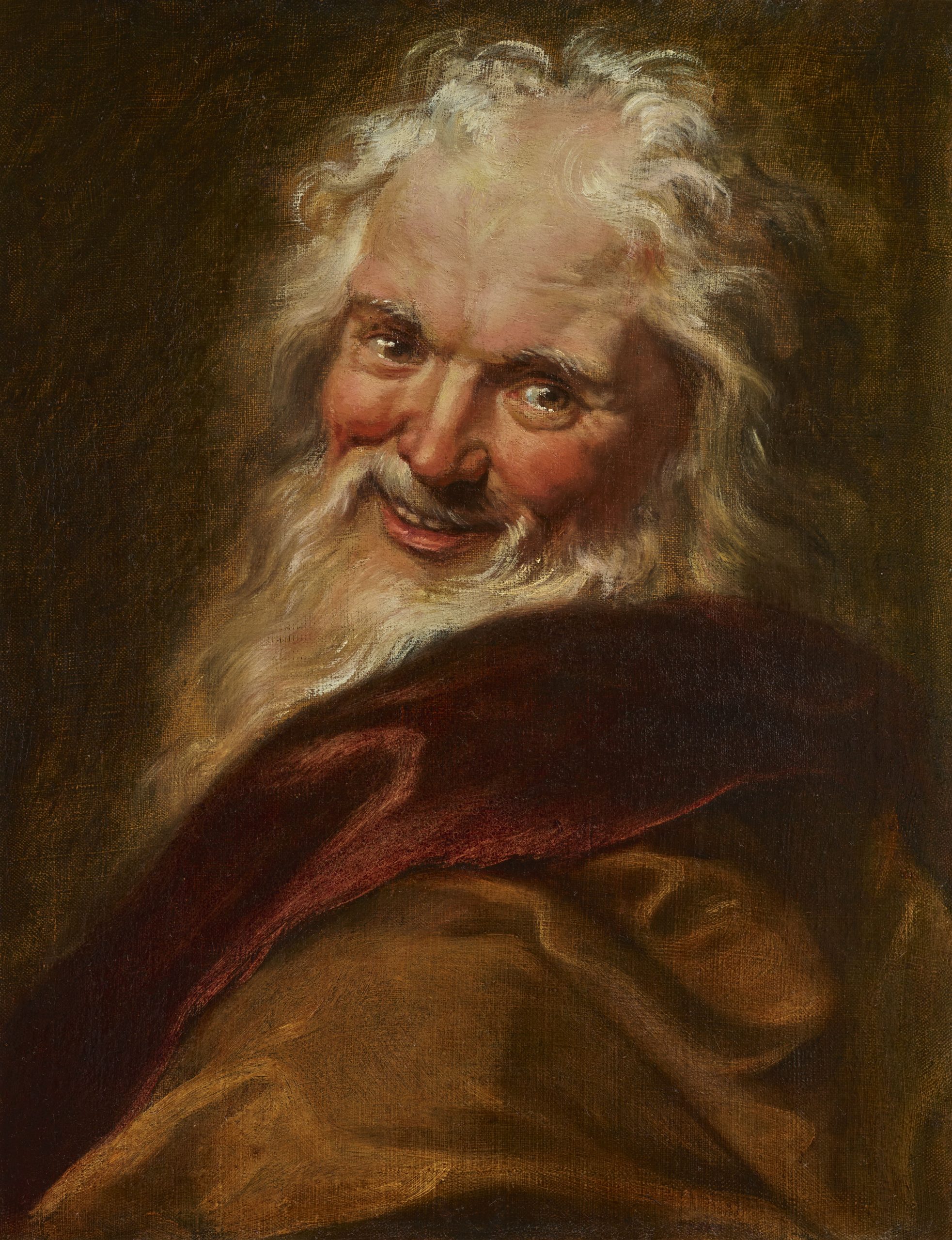
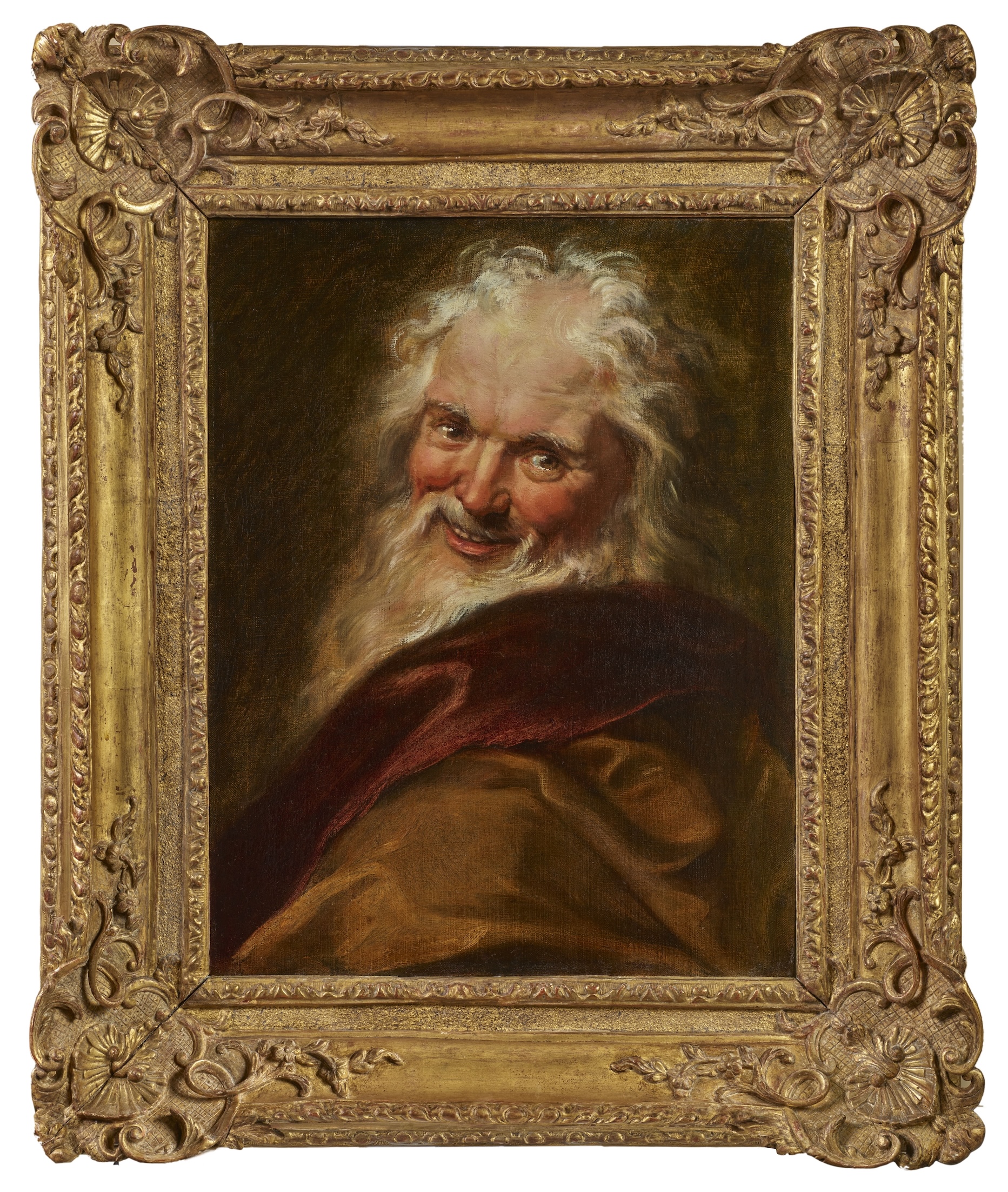
Democritus
Oil on canvas
46 x 35.8 cm
Circa 1692
Provenance : private collection, Italy
It was from his father, Noël Coypel (1628–1707), that Antoine learned painting. The position of Director of the French Academy in Rome, which the elder Coypel held from 1673 to 1675, enabled his young son to develop his talent for painting under the most favourable conditions. Deeply moved and inspired by Baroque works, his richly coloured brush retained throughout his life and across his entire oeuvre the memory of this art of expression, freedom, and passion.
Only in his early twenties and newly returned to France, Antoine Coypel became a member of the Royal Academy of Painting and Sculpture in 1681. His reception piece, combining the academic rigour of Le Brun with a vigorous touch, is a remarkable feat of composition considering his youth, heralding a brilliant career.
The painter was called upon to fulfil numerous prestigious commissions: from the decoration of the royal residences at Marly, Meudon, and Fontainebleau, to the ceiling of the Royal Chapel at the Château de Versailles in 1716, and the series of oil paintings illustrating the Aeneid, intended to adorn the Gallery of Aeneas at the Palais-Royal for Philippe d’Orléans between 1714 and 1717.
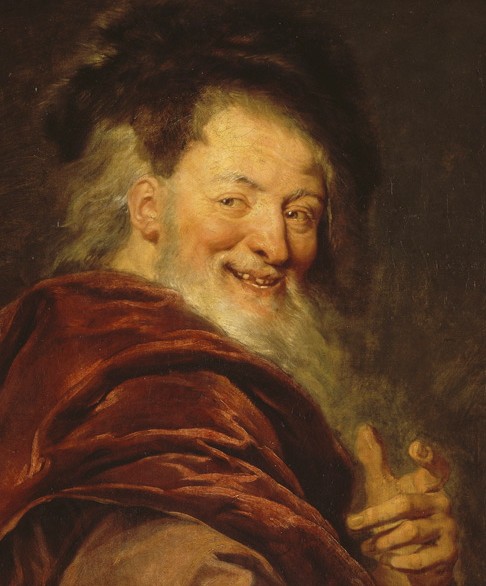
Nevertheless, when considering the artist’s legacy and his most emblematic work, his portrait of the Presocratic philosopher Democritus now commands unanimous admiration (fig. 1, Antoine Coypel, Democritus Laughing, 1692, oil on canvas, Louvre). Through this painting the artist reveals his love for pictorial ardour, for emotion, and for colour. All the lively brushstrokes of this portrait testify to the admiration he held for Rubens and his painting (to whom the portrait was once, wrongly, attributed). The warmth emanating from the redness of the cheeks in this face is equally felt in our painting, which shares the same subject and the same vibrant handling.
A fervent defender of colour and close to Roger de Piles, Coypel painted this canvas as a true Rubenist, both in his swift and sensuous handling—anticipating the manner of Fragonard at the end of the eighteenth century—and in the freedom of his subject: a face for its own sake, a prophetic “head of expression.” Our painting thus ranks among the variants that the artist produced of these highly sketch-like heads, as close to the colourful and joyful Flemish tradition as to the grimacing Dutch tronies.
We would like to thank Madame Nicole Garnier-Pelle, Conservateur Général du Patrimoine and author of the artist’s monograph published by Arthena, for coming to examine our painting and for confirming its attribution to Antoine Coypel (October 2025).